
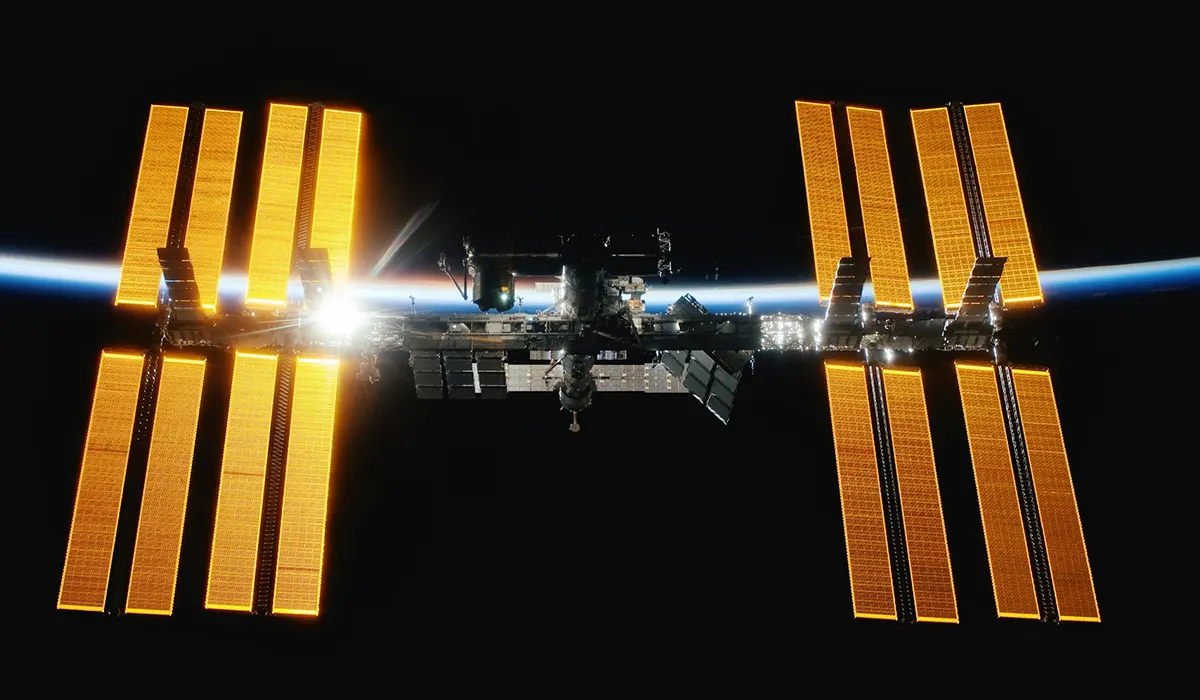
A space station does not fail like an old car. It fails by slowly losing margin. That is why the NASA ISS retirement plan now feels less like a calendar decision and more like an engineering judgment made orbit by orbit.
- The ISS Was Never Meant to Work Forever
- Why the Zvezda Leak Matters More Than the Headlines Suggest
- NASA ISS Retirement Plan: Why 2030 Is a Target, Not a Promise
- What Could Force NASA to Retire the ISS Earlier?
- The Deorbit Question Is Bigger Than the Leak
- What Astronauts Actually Do During an Air-Leak Alert
- NASA ISS Retirement Plan and the Commercial Station Gap
- What Readers Should Watch Next
- The Real Question Is Not Whether the ISS Is Old
The International Space Station still circles Earth every 90 minutes, still hosts astronauts, and still produces science. Yet one stubborn air leak in the Russian segment has turned age from an abstract number into a physical problem with pressure, cracks, and risk.
If you picture the ISS as a clean white spacecraft drifting above Earth, add one less polished detail: crews sometimes close hatches, watch pressure readings, and move toward their return capsule because a leak repair might behave badly.
The ISS Was Never Meant to Work Forever
Russia launched Zarya in 1998, NASA added Unity soon after, and crews began living aboard the station continuously in November 2000. The ISS became less a single spacecraft than a growing machine assembled in orbit, module by module, during one of spaceflight’s hardest construction projects.
The station’s early planning did not assume it would still carry crews three decades later. Engineers built major elements around a finite service life, and political agreements extended operations as the station proved useful. That history matters because metal, seals, valves, joints, and cables all age.
NASA currently aims to operate the ISS through 2030, if the station remains safe and its partners agree. That date also gives commercial station developers time to prepare replacements, so NASA does not lose low-Earth orbit access between one laboratory and the next.
The problem with aging spacecraft never comes down to birthday math alone. Engineers care about loads, thermal cycles, corrosion, micrometeoroid damage, fatigue, air loss, and the ability to isolate a bad area. The ISS has survived because teams monitor those details obsessively.
Why the Zvezda Leak Matters More Than the Headlines Suggest
The leak drawing the most attention sits in the Russian Zvezda service module’s transfer tunnel area, often called the PrK. NASA and Roscosmos have tracked cracks and air loss there for years, with reports dating the issue to around 2019.
NASA’s Office of Inspector General identified cracks and leaks in that area as a top safety risk in a 2024 report. That does not mean the station faces immediate loss. It means the problem now sits high enough on the risk chart to shape decisions.
Here is the key point many headlines miss: the leak appears localized, but the location matters. Crews can close off the area and reduce pressure to slow air loss, yet they cannot simply abandon it forever because it connects to a docking port.
Docking ports add another layer of stress. Visiting spacecraft bring mass, motion, contact loads, and vibration. Even a well-controlled docking still sends mechanical forces into station structure. Over many years, those forces join thermal cycling and pressure stress in ways engineers must track carefully.
The Physics Behind a Small Leak in Orbit
Air leaks feel dramatic because the word “vacuum” does the emotional work. In physics terms, the danger depends on leak rate, available air supply, isolation options, crack growth, and whether repair attempts disturb damaged material. A tiny stable leak differs from a widening crack.
The ISS pressure shell holds cabin air against space, so every crack asks a basic structural question: will it stay small, or can it grow under repeated stress? That question depends on material condition, stress concentration, temperature changes, and the exact crack geometry.
The station crosses from sunlight into darkness roughly every 45 minutes. That cycle heats and cools exposed structure again and again. Materials expand and contract, not violently, but persistently. After tens of thousands of cycles, small flaws deserve serious attention.
Astronauts do not treat these events with panic. They follow procedures. On June 5, NASA told several crew members to shelter in SpaceX’s Crew Dragon while Russian cosmonauts worked on the leak. That sounds frightening, but it also shows planning worked.
NASA ISS Retirement Plan: Why 2030 Is a Target, Not a Promise
NASA’s public plan still points to 2030 for ISS operations, followed by controlled deorbit. But no spacecraft earns ten extra years just because a schedule says so. Engineers must keep proving that the station can support crews with acceptable safety margins.
The NASA ISS retirement plan depends on three clocks running at once. The first measures station health. The second measures commercial replacement stations. The third measures the deorbit system NASA needs to bring the ISS down safely over a remote ocean corridor.
If the leak worsens, NASA could face an uncomfortable choice. It could keep flying with added restrictions, reduce crew activity near affected areas, change docking use, or shorten the station’s life. None of those decisions would arrive from one headline alone.
The counter-argument deserves respect. The ISS has managed ammonia issues, computer faults, debris avoidance, and other problems without ending operations. It still supports research, crew training, technology tests, and international cooperation. Ending it early would carry scientific and political costs.
But actually, that argument only works while the risk stays bounded. A station can remain productive and still approach the point where repair time, crew exposure, and structural uncertainty begin to outweigh the value of another year in orbit.
What Could Force NASA to Retire the ISS Earlier?
NASA would not retire the ISS early because a leak exists. Spacecraft often fly with known faults under strict controls. The more serious question asks whether teams can understand the fault, isolate it, limit its growth, and maintain safe escape options.
The most likely early-retirement triggers would involve risk stacking, not one isolated event. Engineers worry when several problems overlap: a leak that grows, uncertain crack behavior, reduced docking flexibility, unavailable repair access, or a delay in the deorbit vehicle.
Only once in this article, it helps to lay out the decision points plainly:
- A leak rate that keeps rising despite repairs
- Cracks that show signs of growth or uncertain cause
- Loss of a docking path needed for normal operations
- Crew safety rules that limit useful station work
- Deorbit hardware delays that reduce schedule flexibility
That matters.
A spacecraft near retirement can become harder to manage if teams wait too long. You need enough control authority, propulsion planning, and structural confidence to deorbit it safely. Retirement does not mean giving up; sometimes it means acting while options remain strong.
The Leak Is Small, but Orbit Makes Small Problems Matter
The ISS loses only a limited amount of air through the known leak, but engineers care most about whether the crack behavior changes over time.
The Deorbit Question Is Bigger Than the Leak
Retiring the ISS does not mean letting it fall randomly. The station has the mass of a large spacecraft complex, and pieces will survive reentry. NASA plans a controlled deorbit so debris lands in a remote ocean region, far from populated areas.
That plan requires a dedicated deorbit capability. In 2024, NASA selected SpaceX to develop the U.S. Deorbit Vehicle, with a contract value of up to $843 million. NASA still owns the mission responsibility, while SpaceX builds the vehicle under contract.
The deorbit vehicle must attach to the station and guide its final descent with enough thrust and control. That task sounds simple only if you ignore the mass, drag changes, structural flexing, and timing needed to target reentry safely.
This is where early retirement becomes tricky. If station risk rises before deorbit hardware stands ready, NASA gains no easy answer. It must keep the ISS safe enough to operate or safe enough to dispose of, and those goals can conflict.
More Read
What Astronauts Actually Do During an Air-Leak Alert
When mission control tells astronauts to move toward a safe haven, crews do not sprint through the station like a movie scene. They grab checklists, secure equipment, close hatches, confirm communication, and move toward the spacecraft that can bring them home.
One overlooked detail always sticks with me: in orbit, even fear has to share space with Velcro tabs, floating pens, and clipped procedure cards. A crew member may face a serious problem while calmly keeping a checklist from drifting away.
Crew Dragon and Soyuz spacecraft serve as lifeboats while docked. If the ISS ever became unsafe, astronauts could suit up, close hatches, undock, and return to Earth. That option shapes every risk discussion because human escape must remain available.
The June 5 shelter order made headlines because “evacuation” sounds final. NASA’s language sounded calmer because the agency treated the event as a precaution during repair work. That difference matters. A safe-haven step does not equal an abandoned space station.
NASA ISS Retirement Plan and the Commercial Station Gap
NASA wants commercial stations ready before the ISS leaves orbit. Axiom Space, Voyager Space, Blue Origin, Vast, and other groups have proposed or developed low-Earth orbit platforms. These projects aim to replace government-owned station time with NASA as one customer among several.
That transition carries risk. Commercial stations must prove life support, docking, power, crew safety, research capacity, and business demand. A glossy station rendering does not equal flight hardware. NASA knows this, which explains why it wants overlap before ISS retirement.
The NASA ISS retirement plan therefore has a strategic problem. Retire too late, and crews may spend extra years on aging hardware. Retire too early, and the United States could lose continuous human research presence in low Earth orbit.
This is not only about national prestige. Long-duration microgravity research needs continuity. Human physiology, fluid physics, combustion, materials science, and technology tests all benefit from repeat access. A gap would slow programs that took decades to build.
Why NASA Cannot Simply Patch the ISS Forever
Patching a leak in orbit sounds straightforward until you ask where the crack sits, how crews reach it, what material surrounds it, and whether repair material bonds well under station conditions. A repair can reduce air loss without answering why cracks formed.
NASA and Roscosmos have investigated the Zvezda issue for years, but public reports still show uncertainty about the root cause. That uncertainty carries weight. If engineers cannot fully explain crack formation, they must treat future behavior with extra caution.
Old spacecraft also collect operational debt. Every workaround adds procedure time. Every closed hatch changes traffic patterns. Every restricted area reduces flexibility. None of these limits may end a mission alone, but together they can make a once-routine station harder to use.
That is why the most honest answer to “Is it time to deorbit the ISS?” remains conditional. Not today, based on public information. But NASA may move earlier than 2030 if the station stops offering clear safety margin.
What Readers Should Watch Next
If you want to track the ISS story without getting pulled around by scary headlines, watch for leak-rate changes, not just leak mentions. A known leak under control means one thing. A rising leak rate after repair attempts means something more serious.
Also watch NASA advisory panels and Inspector General reports. Those documents often reveal risk trends before public statements sharpen. They may not read like breaking news, but they show how engineers rank threats and where managers see schedule pressure.
The third signal involves the deorbit vehicle. If SpaceX and NASA keep that project on schedule, NASA keeps more options. If delays appear while ISS risk grows, the retirement discussion will move from long-range planning into near-term risk management.
You do not need to treat every air-leak headline as a crisis. Still, you should not dismiss the issue as routine either. The truth sits in the middle: manageable today, serious enough to influence the station’s final years.
The Real Question Is Not Whether the ISS Is Old
Age alone does not retire spacecraft. Loss of confidence does. NASA will keep the ISS flying only while engineers can show that known problems remain controlled, crew escape remains available, and a safe deorbit path remains realistic.
The leak in Zvezda has not made the ISS useless. It has made the final phase more constrained. That distinction matters because good engineering rarely speaks in absolutes. It speaks in margins, probabilities, inspection data, and fallback plans.
So yes, NASA may retire the leaky ISS earlier than planned, but not because the station suddenly became a relic. It may happen if the evidence shows that waiting for 2030 adds risk without adding enough value.
The station gave humanity a permanent foothold in orbit for more than two decades. Its final lesson may prove quieter: even great machines deserve careful endings. That is the real weight behind the NASA ISS retirement plan.
Sources: NASA International Space Station program updates and station history; NASA Office of Inspector General 2024 reporting on ISS operations and Zvezda transfer tunnel risk; NASA announcement selecting SpaceX for the U.S. Deorbit Vehicle; CBC News reporting by Nicole Mortillaro on the ISS leak and retirement question.