
The oddest thing about space medicine is not the rocket. It is the clock. On the International Space Station, human research schedules in biotechnology can decide whether a blood sample, brain test, or tissue print gives clear science or confusing data.
- Why Human Research Schedules in Biotechnology Matter
- The ISS Is a Lab Built Around Time
- What CIPHER Tells Us About the Human Body
- Microbes Add Another Timing Problem
- 3D Bioprinting Shows the Same Lesson
- Human Research Schedules in Biotechnology Are Really About Change
- What Biotech Teams Can Learn From an Astronaut’s Day
- Space Research Does Not Replace Earth Labs
- Why Maintenance Still Counts as Health Work
- How Better Scheduling Could Change Biotech Care
- The Clock Is Becoming Part of Care
Think about that for a second. An astronaut may collect urine early in the day, test memory later, then help print cartilage cells before checking hardware. Each task looks small. Together, they show how tightly health science depends on timing.
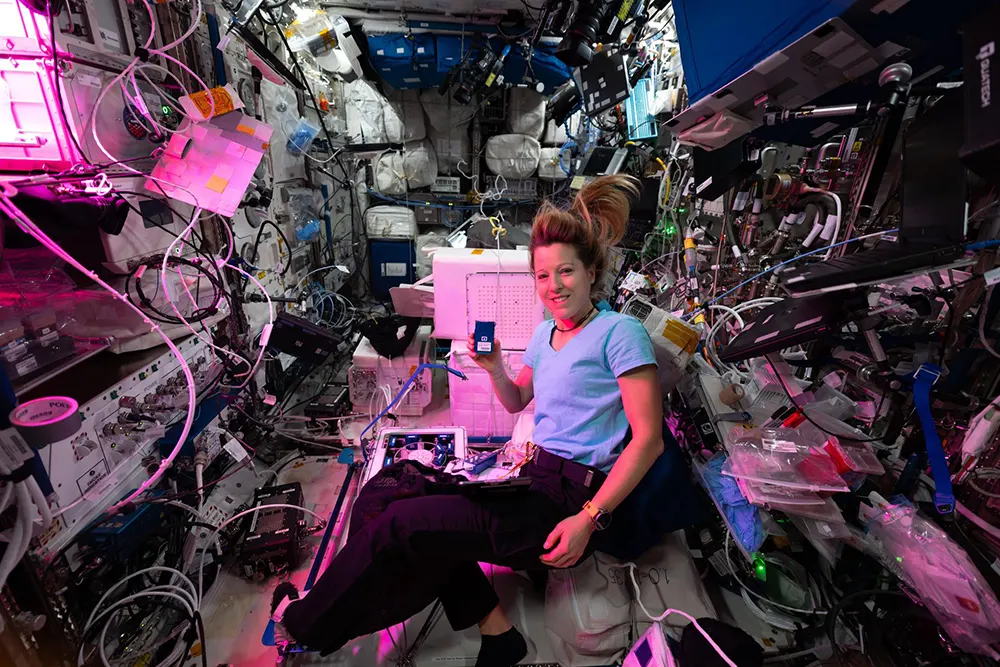
NASA’s Expedition 74 crew gave us a clear example. Chris Williams collected blood and urine for CIPHER research. Jack Hathaway sampled microbes and helped prepare bio-ink. Jessica Meir loaded a 3D bioprinter. The work sounds routine, but the timing behind it matters deeply.
Why Human Research Schedules in Biotechnology Matter
Most people think biotech care starts with machines. They picture DNA sequencers, lab tubes, freezers, clean gloves, and 3D printers. Those tools matter, of course. Yet in human research, the schedule often decides whether those tools measure the real biology.
The body does not stay still. Blood chemistry changes during the day. Sleep affects thinking. Exercise changes stress signals. Food changes test results. In space, those changes become even harder to track because microgravity affects fluids, muscles, bones, and balance.
That is why human research schedules in biotechnology are not just planning tools. They are part of the science. If researchers collect a sample at the wrong time, the result may reflect the schedule problem more than the astronaut’s true health.
The ISS Is a Lab Built Around Time
The International Space Station circles Earth about every 90 minutes. Inside, astronauts live in a place without normal up and down. Their bodies adapt to that setting every day. Researchers study those changes because they can teach us about health in space and on Earth.
Still, the ISS is not a quiet hospital room. Crew members repair equipment, move cargo, exercise, check water systems, and prepare spacecraft for return. Science has to fit inside that busy workday. A missed step can weaken months of careful planning.
This is where space research teaches a useful lesson. Good biotech care does not only ask what test to run. It also asks when to run it, what happened before it, and how the body or sample changed during that time.
What CIPHER Tells Us About the Human Body
NASA’s CIPHER program includes 14 studies. These studies track physical and mental changes before, during, and after spaceflight. That design matters because one test rarely tells the full story. A timeline gives scientists a much better view.
Chris Williams helped with this work by collecting blood and urine samples. He also completed tests for thinking, motion, distance, and direction. These skills matter in orbit. Astronauts must move, judge space, and react quickly in a place where the body senses motion differently.
Why One Health Check Is Not Enough
A single blood test is like one photo from a long movie. It shows one moment, not the full story. Space medicine needs repeated checks because the body keeps adjusting. The same idea now matters more in biotech care on Earth.
For example, a patient’s test result can change after poor sleep, a hard workout, a meal, or a new medicine. If doctors ignore timing, they may miss the real pattern. That is why schedule design can change care in practical ways.
Microbes Add Another Timing Problem
Jack Hathaway also collected microbe samples from the station. Those samples will grow for several days before scientists sequence their DNA. This helps researchers learn which bacteria survive in space and whether some carry genes linked with antibiotic resistance.
That sounds like a space-only issue, but it is not. Hospitals, clinics, and labs also deal with microbes on surfaces, tools, water systems, and human skin. A sample taken before cleaning can tell a different story than one taken after cleaning.
Why Microbial Timing Matters for Care
DNA sequencing can identify bacteria and some resistance genes. Yet a gene alone does not always mean danger. Scientists also need to know where the sample came from, when it was collected, and what happened in that area before sampling.
This matters for human research schedules in biotechnology because microbe testing depends on context. A swab from a busy surface after cargo work may not mean the same thing as a swab taken after a quiet night. The clock changes the meaning.
3D Bioprinting Shows the Same Lesson
The cartilage printing work may catch the most attention. Hathaway thawed and cleaned cartilage cells mixed with bio-ink. Then he helped Jessica Meir load the material into a 3D bioprinter. The goal was to print cartilage tissue in microgravity.
Cartilage is hard for the body to repair. It has limited blood flow, so damage can last for years. Researchers want to learn how cells grow, connect, and form tissue. Space gives them a special test setting because gravity does not pull the material down in the usual way.
This does not mean astronauts will soon print knee replacements in orbit. The better view is more careful. Microgravity may help scientists study how tissues form without the same sagging or settling seen on Earth. That knowledge may guide future medical work.
Expert Tip: Time Acts Like a Lab Material
In space-based biotech, time acts like a lab material: handle it badly, and the experiment can change before the data arrives.
The same rule applies to Earth medicine. Cells change after thawing. Bio-ink can shift with temperature. Tissue quality may change if loading takes too long. When living cells form part of care, timing does not sit outside the treatment. It shapes it.
Human Research Schedules in Biotechnology Are Really About Change
The most important point is simple. Biology moves. The human body never pauses so a lab can catch up. In space, that truth becomes clearer because microgravity pushes the body to adapt in visible ways.
Fluids shift toward the head. Muscles lose some load. Bones receive less stress. Balance signals change. Sleep can suffer. Thinking skills may shift under fatigue. Researchers need schedules that follow those changes instead of pretending the body stays fixed.
Why This Matters for Patients on Earth
The same problem appears in regular health care. Your blood sugar after breakfast is not the same as your blood sugar after fasting. A tired brain does not test like a rested one. A wound sample changes after cleaning or antibiotic use.
You can use this idea in your own care. Ask when a sample should be collected. Ask whether sleep, food, medicine, or exercise can affect the result. Good doctors and lab teams should welcome that question because it helps protect the answer.
What Biotech Teams Can Learn From an Astronaut’s Day
The ISS workday mixed human research, microbial sampling, tissue printing, spacesuit repair, water checks, cargo packing, and spacecraft duties. That may sound scattered. In reality, it shows how future biotech care may work: many systems must support one medical goal.
A therapy built from living cells cannot behave like a simple device. Cells respond to heat, time, pressure, nutrients, and handling. Microbes adapt. Human bodies change. Care teams must plan around these facts if they want cleaner data and safer choices.
Here is one simple checklist that patients, clinicians, and biotech teams can use:
- Ask when the sample left the body, surface, freezer, or incubator.
- Track what happened before testing or treatment began.
- Check whether food, sleep, medicine, stress, or exercise changed the result.
- Record storage time, temperature, and handling steps.
- Confirm whether another team could repeat the timing closely.
Those questions may sound basic. They are not. They can separate a useful result from a weak one. A number on a lab report looks precise, but it only helps when the timing and handling behind it make sense.
Space Research Does Not Replace Earth Labs
We should be careful here. The ISS gives researchers rare conditions, but it does not replace Earth labs. Space studies often use small crew numbers. Equipment is limited. Crew time costs a lot. Sample return can also take careful planning.
That does not weaken the value of the work. It simply keeps the claims honest. Earth labs give researchers more scale and control. The ISS gives them microgravity and a tightly managed human setting. Together, both settings help test the same idea from different angles.
The Best Use of Space Data
Space data works best when scientists compare it with Earth data. If both point in the same direction, confidence grows. If they disagree, researchers look for the reason. Maybe gravity mattered. Maybe timing mattered. Maybe the sample handling changed the result.
This kind of careful thinking is good for biotech care. It avoids big promises before the evidence supports them. It also helps researchers build better methods for tissue printing, microbial testing, astronaut health, and future patient treatment.
Why Maintenance Still Counts as Health Work
On the same day as the science work, crew members also handled spacesuit maintenance and cargo duties. That may look separate from health research. It is not fully separate. On a spacecraft, engineering and medicine meet all the time.
A spacesuit repair protects future spacewalks. Water checks support safe drinking and food prep. Ventilation helps move air and affects how particles travel. Cargo packing controls which samples return to Earth and when they arrive for study.
This matters because health care on Earth also depends on hidden systems. A freezer problem can affect cell samples. A late courier can change test quality. A device that needs service can delay care. Sometimes the biology is not the problem. The system around it is.
How Better Scheduling Could Change Biotech Care
Future care may depend more on living materials. Doctors may use a patient’s own cells for repair. Labs may print tissue models to test drugs. Clinics may track microbes with faster sequencing. Each step will need strong timing rules.
That does not mean every clinic needs to run like a space mission. It means teams should treat timing as part of care quality. A schedule should protect the sample, the patient, and the final decision. That is a practical shift.
For patients, this could mean clearer instructions. For doctors, it could mean better records around timing. For biotech companies, it could mean stronger testing before a treatment reaches people. Small timing fixes can prevent large mistakes.
The Clock Is Becoming Part of Care
The ISS shows a quiet truth about modern medicine. Big progress often depends on small acts done at the right time. A tube gets filled. A swab gets stored. A cell mix gets loaded before it changes.
That may sound less exciting than a new cure, but it matters. Better timing can improve test quality, tissue research, microbe tracking, and patient safety. The future of care will not only depend on better tools. It will depend on better schedules.
The next step in biotech is not only about what we can build. It is also about when we measure, move, grow, and treat living systems. That is why human research schedules in biotechnology deserve attention far beyond the space station.
Source: NASA International Space Station blog update on Expedition 74 activities, including CIPHER human research, microbial DNA sequencing, 3D bioprinting of cartilage tissue, spacesuit maintenance, ESA hardware and water checks, SpaceX Dragon cargo work, and Roscosmos Progress 95 duties.