
Last Updated: May 2026
Getting things right is the whole point of this website. When we fall short of that, fixing it clearly and honestly is the only reasonable response. This page explains how we handle errors — what counts as a correction, how we make them, and how you can report something you believe is wrong.
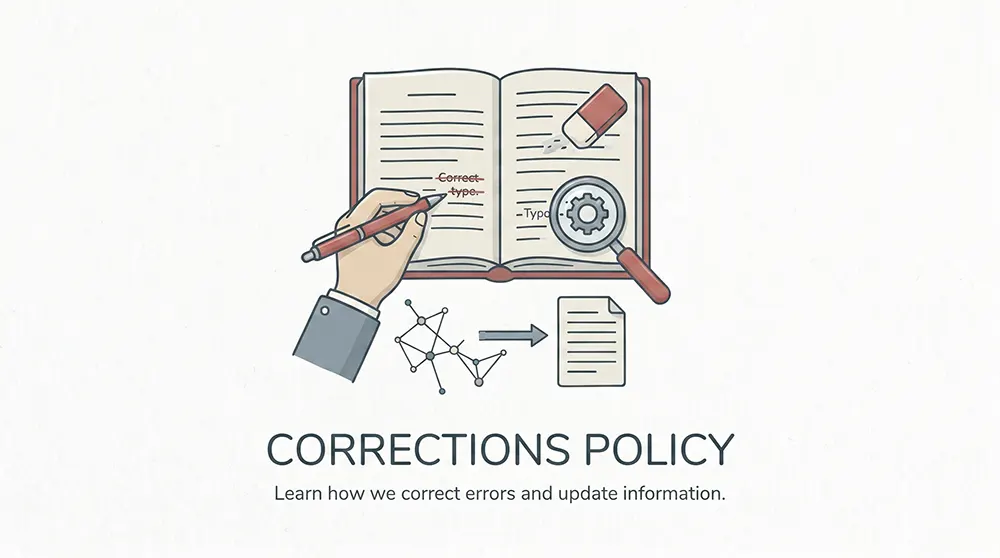
Why This Policy Exists
Science journalism carries a responsibility that many websites ignore. An error in a health article can shape decisions people make about their own wellbeing. An inaccurate summary of a study can spread across the internet and become the version people remember long after the original paper has moved on. We are aware of that, and we take it seriously.
Transparency is part of what makes a science publication trustworthy. Anyone can make a mistake — what matters is whether you fix it honestly or try to hide it. We fix it honestly, every time, and this policy explains exactly how.
Types of Errors We Correct
Not every change to a published article counts as a formal correction. We distinguish between different types of updates so readers always understand what kind of change happened and why.
Routine Updates
Science moves forward continuously. Sometimes we update an article because new research has emerged, a mission has reached a new milestone, or an organisation has released updated data. These changes improve accuracy and relevance but do not mean the original version contained an error. When we make this kind of update, we add a note at the bottom of the article stating that an update occurred, along with the date.
Minor Corrections
Spelling mistakes, grammatical errors, broken links, and small factual details that do not affect the meaning or conclusion of an article get fixed immediately. A formal correction note is not always necessary for these unless a factual claim, however minor, turns out to be wrong.
Factual Corrections
When a factual claim in a published article turns out to be incorrect — a misread study, a wrong figure, an inaccurate description of what researchers found, or a claim attributed to the wrong source — we correct the specific error in the article text and add a correction note at the bottom. The note states clearly what was wrong and what the correct information is. We do not delete the original wording and rewrite the article as if the error never happened. We acknowledge it directly.
Significant Corrections
When an error is serious enough to materially change the meaning or conclusion of an article — for example, if the central finding we reported turns out to have been misrepresented in the study itself — we treat this as a significant correction. We correct the article, add a prominent correction notice explaining what changed and why, and update the article’s revision date. An editorial note at the top of the article may also appear if the correction is substantial enough to affect how readers should approach the piece.
What We Do Not Do
We do not alter published articles to remove accurate information because someone finds it inconvenient. We do not delete articles without explanation. We do not quietly rewrite content to change its meaning without disclosing that a change occurred. We do not adjust our coverage in response to pressure from individuals, companies, or organisations mentioned in our articles.
When someone asks us to change or remove factually accurate content, we decline. When content is inaccurate, we correct it — not because someone asked us to, but because accuracy is the standard we hold ourselves to.
How to Report an Error
If you believe something we published is factually incorrect, use our contact page to send us a message. Include the title of the article, the specific claim you believe is wrong, and — if possible — a source that supports the correct information. A link to the original study or an official report is the most useful thing you can include.
What Happens After You Report
We read every correction request. We do not dismiss reports because they are inconvenient or because they challenge something we published confidently. If we got something wrong, we want to know. If our investigation confirms the original reporting was accurate, we will explain why clearly and point to the sources that support it.
We aim to respond to correction requests within three to five business days. More complex cases requiring deeper research may take longer — we will let you know if that applies to your report.
Corrections and Editorial Credibility
Publishing a corrections policy and following it consistently signals to readers — and to Google’s quality assessment guidelines — that a publication holds itself accountable. We follow this policy not because accountability improves search performance, though it may, but because it reflects how we actually think about our responsibility to the people who read what we write.
Every article on this site carries that responsibility. This policy is how we honour it.
Contact
To report a potential error, use our contact page. We will investigate and respond.