
Quantum physics often feels like a puzzle with pieces that don’t quite fit. Imagine trying to predict how hundreds of tiny magnets, or spins, interact in a disordered material. This is not just a math problem — it’s a challenge that pushes the limits of our computers. But what if there was a way to map these complex quantum interactions in three dimensions with surprising clarity?
- The Challenge of Simulating Quantum Many-Body Systems
- Tensor Networks and Belief Propagation: A New Classical Approach
- Why 3D Tensor Networks Matter for Quantum Simulations
- The Kibble-Zurek Physics Verified Through Classical Simulation
- Implications for Quantum Computing and Materials Science
- What Comes Next for Quantum Behavior Studies with 3D Tensor Networks
- The Emerging Role of Classical Simulations in Quantum Research
- New Perspectives on Quantum Behavior with 3D Tensor Networks
Recently, researchers have made a significant step forward by applying three-dimensional tensor network techniques to simulate quantum behavior in disordered spin systems. This approach challenges the assumption that only quantum machines can handle such simulations efficiently. It opens a window into understanding quantum dynamics on a scale and detail previously thought unreachable by classical methods.
If you’ve ever wondered how scientists explore the strange world of quantum materials or how they test the limits of quantum computers, this story offers a fresh perspective. It shows how classical computing, combined with clever mathematical frameworks, can still hold its ground in the race to decode quantum complexity.
The Challenge of Simulating Quantum Many-Body Systems
Quantum many-body systems, like spin glasses, are notoriously difficult to simulate because of the exponential growth in complexity as you add more particles. Each spin can interact with many others, creating a web of entanglement that quickly overwhelms traditional computational methods. This problem becomes even more pronounced in two and three spatial dimensions, where interactions are richer and more complex.
For years, physicists have relied on various classical techniques to approximate these systems. Some methods work well in one dimension but fail to scale up. Others suffer from numerical instabilities or require impractical amounts of computational power. This limitation has fueled the belief that quantum processors might hold an advantage for simulating such systems, especially as quantum annealers and other quantum devices continue to develop.
The recent experiments on D-Wave’s quantum annealer, which simulated large-scale quantum annealing dynamics of Ising spin glasses, were hailed as evidence that quantum hardware had surpassed classical computers for this task. However, these claims sparked debate over whether classical methods had truly been exhausted.
Tensor Networks and Belief Propagation: A New Classical Approach
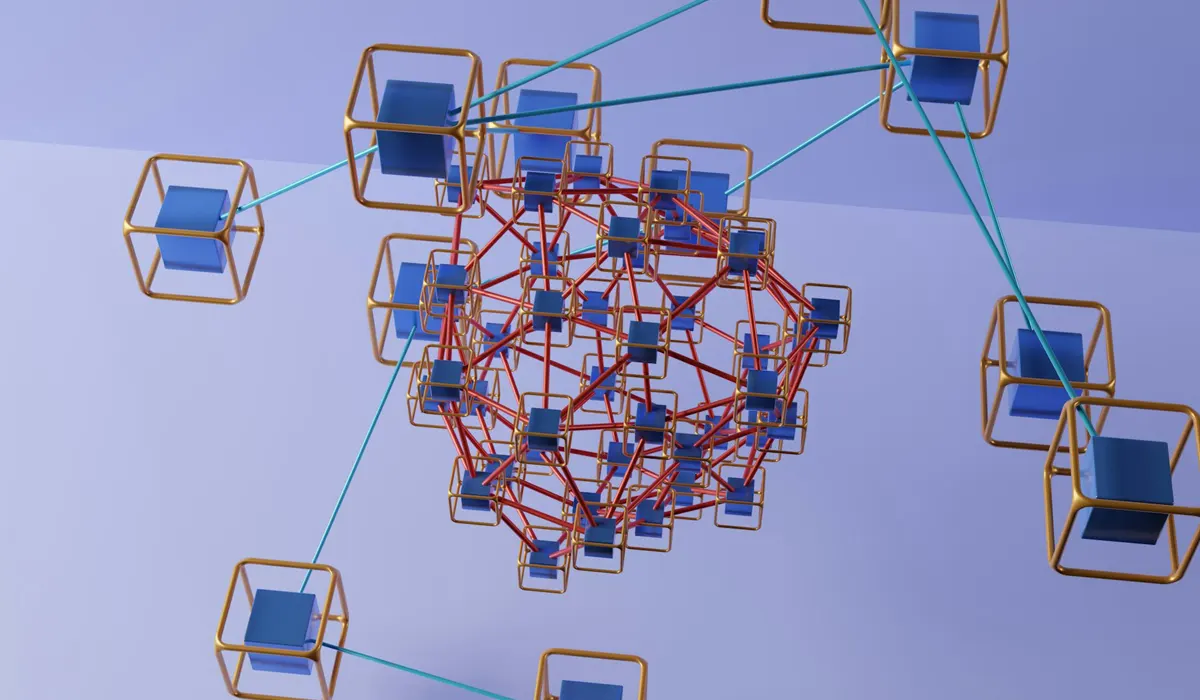
Tensor networks provide a way to represent complex quantum states by breaking them down into interconnected tensors, which are multidimensional arrays. This structure can capture entanglement patterns efficiently, but contracting these networks—combining tensors to extract physical predictions—remains computationally expensive, especially in higher dimensions.
The breakthrough came when researchers combined tensor networks with belief propagation (BP), a message-passing algorithm often used in probabilistic graphical models. BP helps manage the entanglement that builds up during time evolution by approximating the network’s contraction in a scalable way.
By tailoring tensor networks to specific lattice geometries and applying BP, the researchers simulated the dynamics of disordered spin models in both two and three dimensions. Their approach achieved accuracies comparable to state-of-the-art quantum annealing experiments but required only modest classical computational resources.
This method not only challenges the notion that quantum annealers hold an exclusive advantage but also offers a scalable framework for studying complex quantum systems on classical hardware.
Why 3D Tensor Networks Matter for Quantum Simulations
Most tensor network methods have focused on one-dimensional or, at best, two-dimensional systems. Extending these techniques to three dimensions is non-trivial due to the explosive growth in computational demands and the increased complexity of entanglement patterns.
The researchers’ success in applying 3D tensor networks to simulate hundreds of qubits marks a significant advance. It means that classical simulations can now tackle problems closer to the scale and complexity of current quantum devices. This capability is crucial for benchmarking quantum processors and understanding quantum phenomena that emerge in realistic materials.
Moreover, 3D tensor networks open new avenues for exploring universal physics, such as the Kibble-Zurek mechanism, which describes how systems behave near critical points during phase transitions. The ability to simulate these effects in large, disordered quantum systems provides insights that were previously out of reach.
The Kibble-Zurek Physics Verified Through Classical Simulation
One of the key results from this work was the verification of universal Kibble-Zurek physics in large quantum spin systems. The Kibble-Zurek mechanism predicts how defects form when a system is driven through a phase transition at a finite speed.
Simulating this behavior in disordered spin glasses with hundreds of qubits required capturing subtle correlations and entanglement growth over time. The tensor network and belief propagation framework handled this complexity effectively, confirming theoretical predictions and matching experimental observations from quantum annealers.
This achievement demonstrates that classical simulations can provide detailed, scalable models of dynamic quantum phenomena, which are essential for both fundamental physics and the development of quantum technologies.
Note
Tensor networks can efficiently represent complex quantum states by decomposing them into interconnected tensors, making high-dimensional quantum simulations more manageable.
Implications for Quantum Computing and Materials Science
This work underscores the importance of continually refining classical simulation methods even as quantum hardware advances. Classical algorithms like tensor networks combined with belief propagation provide a powerful toolkit for testing quantum devices and exploring quantum phases of matter.
For materials science, these simulations offer a way to study disordered and frustrated systems, which are common in magnetic materials and quantum spin liquids. Understanding their dynamics helps in designing new materials with exotic properties, including potential applications in quantum information and sensing.
From a computational perspective, these results highlight that the boundary between classical and quantum computational power remains fluid. Classical methods, when carefully optimized, can still challenge claims of quantum advantage, emphasizing the need for rigorous benchmarks.
What Comes Next for Quantum Behavior Studies with 3D Tensor Networks
The path forward involves scaling these methods further and integrating them with other classical and quantum algorithms. Researchers aim to simulate even larger systems and more complex interactions, pushing the limits of both hardware and software.
Combining tensor networks with machine learning or other numerical techniques could enhance accuracy and efficiency. Additionally, exploring different lattice geometries and disorder types will provide a broader understanding of quantum many-body physics.
This progress also calls for closer collaboration between experimentalists and theorists. Classical simulations can guide quantum experiments, helping to interpret results and design new protocols for quantum computation and simulation.
The Emerging Role of Classical Simulations in Quantum Research
Despite the excitement around quantum processors, classical simulations remain indispensable. They serve as a reference point to verify quantum experiments and clarify the nature of quantum phenomena observed.
The success of 3D tensor networks in simulating disordered quantum systems illustrates that classical computation still has much to offer. It reminds us that quantum advantage claims must be carefully examined against the evolving landscape of classical algorithms.
Ultimately, this work enriches our toolkit for exploring quantum behavior, blending mathematical rigor with computational innovation. It encourages a balanced view, recognizing both the potential of quantum hardware and the enduring power of classical methods.
New Perspectives on Quantum Behavior with 3D Tensor Networks
The ability to simulate quantum dynamics in three dimensions using tensor networks marks a meaningful shift in how we approach quantum many-body problems. It challenges the assumption that quantum devices are the only path forward for large-scale simulations.
By capturing complex entanglement and disorder effects with classical resources, researchers have expanded our understanding of quantum behavior in realistic settings. This progress not only informs the design of quantum technologies but also deepens our grasp of fundamental physics.
As simulations grow more sophisticated, they will continue to play a vital role in decoding the quantum world, complementing experimental advances and guiding future discoveries in quantum science.
What are tensor networks, and why are they useful in quantum simulations?
Tensor networks are mathematical structures that break down complex quantum states into interconnected tensors. This representation helps manage entanglement and computational complexity, making simulations of many-body quantum systems more feasible.
How does belief propagation improve tensor network simulations?
Belief propagation is a message-passing algorithm that approximates the contraction of tensor networks. It helps control the growth of entanglement during time evolution, enabling simulations to scale efficiently in higher dimensions.
Why is simulating quantum systems in three dimensions challenging?
Three-dimensional quantum systems have more complex entanglement patterns and interactions, which exponentially increase computational demands. Traditional methods often struggle to handle this complexity without excessive resources.
What is the significance of verifying Kibble-Zurek physics in these simulations?
Verifying Kibble-Zurek physics confirms that the simulations accurately capture universal behaviors near phase transitions. This validation is crucial for trusting the simulations’ predictions and understanding dynamic quantum phenomena.
Does this mean classical computers can replace quantum computers for these tasks?
Not entirely. While classical methods have improved, quantum computers still offer potential advantages for certain problems. However, classical simulations remain essential for benchmarking and exploring quantum systems where quantum hardware is limited.