
Imagine a race where innovation does not hold back the leader in technology; instead, the power required to run their machines does. The United States dominates the semiconductor market, producing the chips that fuel artificial intelligence. Yet, when it comes to running the massive data centres that crunch AI’s complex calculations, China holds a surprising advantage: access to cheap, abundant energy.
This energy edge is not just about cost. It’s about scale, sustainability, and strategic positioning. China’s ability to power sprawling AI data centres with clean, renewable energy could reshape the global balance in AI development, even as the US leads in chip design.
Why energy matters more than you might think in the AI race
Artificial intelligence is often viewed as a competition of algorithms and chips, but the real limiting factor behind AI’s growth is power. Training and running AI models demand enormous computational resources, which translates directly into huge electricity consumption. Without reliable, affordable energy, these systems cannot operate at scale.
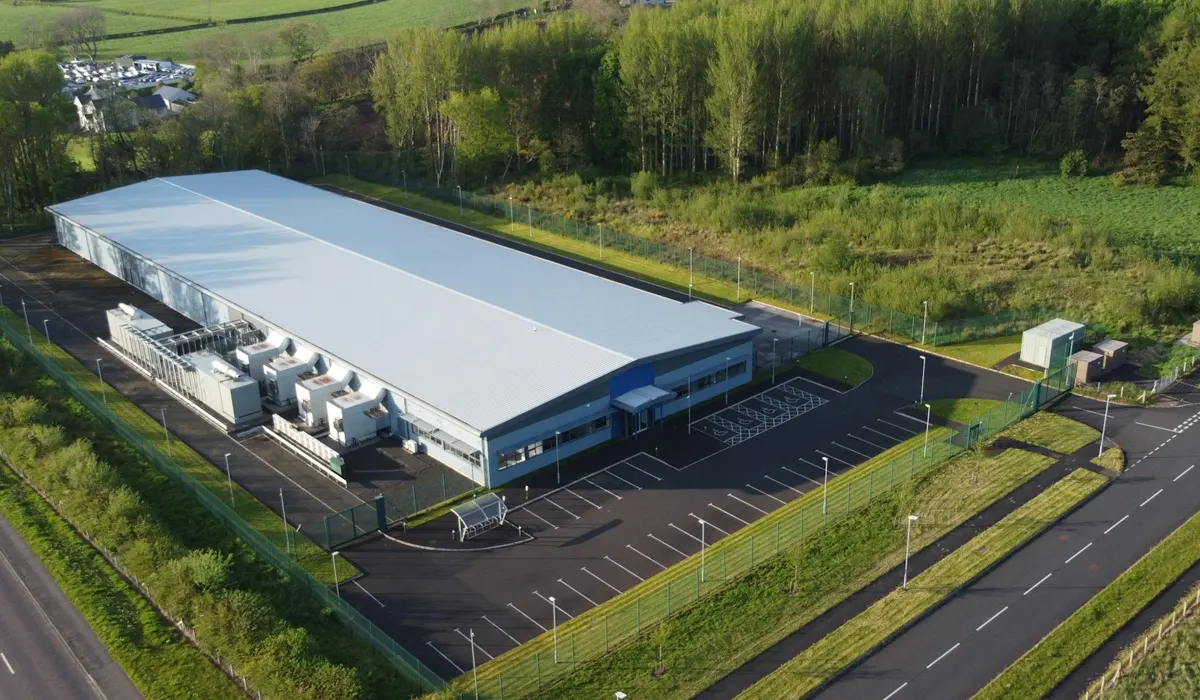
A single data centre can use as much electricity as 100,000 homes. The next generation of hyperscale data centres consumes energy comparable to millions of households. This sheer power requirement makes energy supply a fundamental constraint in AI development.
China’s advantage lies in its ability to generate vast amounts of cheap electricity, especially from renewable sources like wind and solar. This allows it to run large AI data centres more sustainably and cost-effectively than many other countries, including the US.
The US leads in chip innovation but faces challenges from an aging electrical grid and local resistance to data centre construction, slowing its AI infrastructure expansion. Energy availability is not just a background issue; it’s a core strategic factor shaping the AI race.
The Power Behind AI: Why Energy Is a Critical Bottleneck
AI models don’t run on ideas alone. They require massive computing power, and that power demands electricity — lots of it. A typical data centre can consume as much electricity as 100,000 households. Next-generation “hyperscale” centres can use as much power as two million homes. This sheer energy demand is often overlooked when discussing AI’s future.
China’s advantage comes from its vast, cheap, and increasingly renewable energy supply. The country generates more than twice the electricity of the US, and it’s expanding that capacity aggressively. Over the next five years, China plans to add more than six times the electricity generation capacity of the US, with a strong focus on solar and wind power.
This isn’t just about producing more energy; it’s about producing energy in a way that’s sustainable and cost-effective. China’s “East Data, West Computing” initiative places new data centres in interior regions rich with renewable resources, linking them directly to large-scale wind and solar farms.
How China’s Renewable Energy Strategy Fuels AI Growth
China’s government is integrating AI data centres with renewable energy projects, a move that reduces costs and environmental impact. For instance, a 500-megawatt wind and solar project in Ningxia powers a cloud data centre via a dedicated transmission line, ensuring stable, low-carbon electricity.
This approach gives China a strategic edge. While the US struggles with an aging, fragmented power grid and local opposition to data centre construction, China’s state-led energy expansion moves quickly and efficiently.
China’s rapid build-out of renewable energy paired with large-scale data centre construction allows it to meet AI’s enormous power needs. This combination could tilt the balance in China’s favor as AI models grow more complex and energy-hungry.
US vs China: A Tale of Two Bottlenecks
The US leads in semiconductor technology, home to giants like Nvidia, AMD, and Intel. Silicon Valley companies invest heavily in AI infrastructure, with projected spending of $630 billion in 2026 alone. The US also has the largest number of data centres — over 5,400 compared to China’s 449 in 2025.
However, the US faces a critical limitation: power supply. The country’s energy grid is under strain, with new data centre projects dropping by 50% in late 2025 due to grid constraints. Local opposition to data centres adds another layer of difficulty, slowing expansion.
China, on the other hand, faces a different challenge. It has the energy but is still catching up in chip manufacturing. Restrictions on access to top-end chips from Taiwan Semiconductor Manufacturing Company (TSMC) have pushed China toward domestic producers like SMIC, which currently lag behind in performance.
By 2030, China’s data centre capacity is expected to nearly double, reaching 60 gigawatts and consuming 2.3% of the country’s total electricity. This rapid growth is backed by a manufacturing base and regulatory environment that allow faster construction than in the US.
The Impact of Energy on AI Infrastructure Development
The difference in energy availability shapes how quickly and efficiently AI infrastructure can be built. China’s modular data centres can be constructed in six months, while US counterparts take at least a year. This speed matters in a field where every month counts.
Experts like Elon Musk have pointed out that electricity, not chips, may be the limiting factor for AI deployment. China’s rapid growth in electricity generation gives it a clear advantage in powering AI systems at scale.
However, China’s energy system is not without flaws. Its power grid is fragmented, organized at the provincial level, which limits electricity flow between regions. Most data centres still cluster near eastern megacities, where power supply can face restrictions.
Energy and AI
China’s approach to pairing renewable energy projects directly with data centres is a rare example of infrastructure designed specifically to support AI’s unique demands.
Challenges on Both Sides: What Limits China’s Energy Advantage?
China’s rapid data centre expansion has encountered quality control issues. Building heterogeneous chip clusters with different hardware complicates AI workloads. Some centres lack the experience needed for complex projects, leading to inefficiencies.
Despite the push toward renewable energy, many data centres remain in power-constrained urban areas. Provincial-level grid management means electricity flows are often one-way, limiting flexibility and regional balancing.
China’s new energy markets and regional trading systems are still developing slowly, which could hamper efficient use of renewable power in the near term.
Meanwhile, the US faces its own hurdles. Local opposition to data centres reflects concerns about environmental impact and grid strain. The US grid’s aging infrastructure and regulatory complexities slow new energy projects and data centre construction.
Balancing Growth and Sustainability in AI Infrastructure
China’s strategy hinges on cheap, stable, and low-carbon electricity to power AI growth sustainably. This focus aligns with global trends toward greener energy, potentially giving China an edge as energy costs and environmental regulations tighten worldwide.
The US, with its technological lead in chips, must address its energy bottleneck to maintain competitiveness. Investments in grid modernization, renewable energy integration, and community engagement will be critical.
Both countries face a balancing act: scaling AI infrastructure rapidly while managing environmental and social impacts.
Why China’s Cheap Energy Could Win the AI Race with the US
The AI race is often framed as a battle of technology, but it’s equally a race for energy resources and infrastructure. China’s access to cheap, renewable energy, combined with rapid data centre construction, positions it strongly to power the AI models of tomorrow.
While the US leads in semiconductor innovation, its energy grid constraints and slower data centre growth limit how quickly it can deploy AI at scale. China’s state-led approach enables faster expansion and integration of renewables, making it a formidable competitor.
The long-term winner will likely be the one that can balance chip innovation with scalable, reliable power. For now, China’s cheap energy supply gives it a critical upper hand in this balance.
The question is not just who has the best chips, but who can power those chips sustainably and at scale. China’s energy strategy is a key factor that could decide the future of AI development.