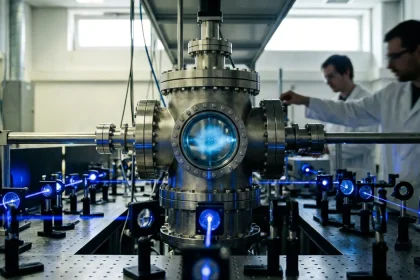

Dreams usually disappear before you can grab them. You wake up with a face, a hallway, maybe the feeling of falling, and then the details slip away like water through your fingers. That is exactly why the japanese scientists dream recording device is getting so much attention.
- How the Japanese Scientists Dream Recording Device Actually Works
- Why the Kyoto Work Stands Out
- Why REM Sleep Matters So Much
- The Big Scientific Constraint: fMRI Is Slow
- What the Device Still Misses
- Why This Could Matter for Mental Health
- The Ethical Questions Arrive Quickly
- What Researchers Will Need Next
- What This Really Tells Us About Dreams
- What to Watch Next
- FAQ: Japanese Scientists Dream Recording Device
What Kyoto researchers built does not read dreams like a storybook. It maps brain activity during sleep, then uses that data to estimate what a person may have seen in the dream. That sounds simple until you remember how messy sleep really is.
Most people imagine dreams as private movies playing in the dark. The truth is less tidy. The brain is not filming anything. It is building patterns, stitching memory, perception, and emotion together in real time, often without any clear separation between them.
How the Japanese Scientists Dream Recording Device Actually Works
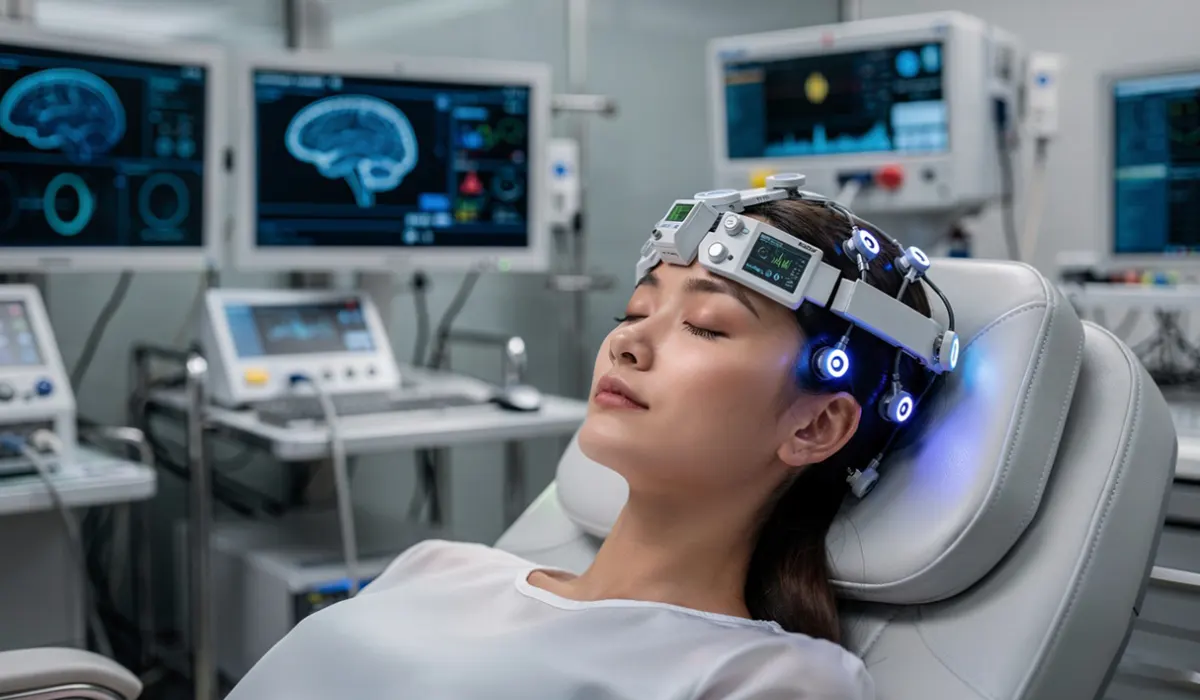
The core of the system is functional magnetic resonance imaging, or fMRI. This scanner does not see thoughts directly. It detects changes in blood flow, which act as a rough marker of neural activity. That matters because the brain uses oxygen fast when certain regions are active.
Researchers at ATR Computational Neuroscience Laboratories in Kyoto used fMRI while volunteers slept. They focused on REM sleep, the stage when dreams are usually richest in visual detail. When a subject woke, the person described the dream, and those reports were matched with the scan data.
That matching step is where the real work happened. The team built a training set linking patterns in brain activity with reported dream content. Over time, the algorithm learned which neural signatures tended to line up with things like faces, objects, or scenes.
A useful way to think about it is this: the system is not extracting a full dream movie. It is estimating likely visual content from repeated patterns in brain activity. That distinction matters because it keeps the claim grounded in what the data can actually support.
Why the Kyoto Work Stands Out
Dream research has always been hard because dreams vanish unless a person remembers them. Self-report is still the main source of dream data, and self-report has limits. People forget details, compress timelines, and often describe the dream only after waking makes it feel coherent.
This is why the japanese scientists dream recording device is interesting from a research standpoint. It gives scientists a second signal to compare against the person’s memory. That does not make the dream “objective” in a perfect sense, but it does reduce dependence on recall alone.
The numbers people quote need context. Reports from this line of work have described roughly 60 percent accuracy for broad categories, with higher performance for some visual items. That is promising, but it is not mind reading. It is pattern classification under controlled conditions.
The point is not that the machine knows your dream the way you know it. The point is that the machine can detect recurring brain states tied to dream imagery. That is a real technical step, even if it falls short of full reconstruction.
Expert Tip
The most important limitation is not just fMRI resolution — it is the gap between a brain pattern and the dream the person later remembers.
Why REM Sleep Matters So Much
REM sleep is where most vivid dreaming happens, though not every dream comes from REM. During this phase, the brain behaves differently than it does during quiet wakefulness. Visual areas can stay active, while the body remains largely still because of sleep paralysis mechanisms.
That combination makes REM useful for dream studies. The brain is active enough to show measurable patterns, but the person is not moving around and breaking the scan. Researchers can therefore time awakenings more carefully and ask for immediate reports.
Here is the catch, though: REM sleep is only part of the story. Dreams can also occur in other sleep stages, often with less visual intensity and more fragmented content. So a device tuned to REM may miss a large slice of dream life.
That is one reason scientists treat the current results as a starting point, not a final answer. The japanese scientists dream recording device works best when the brain state is stable enough for the model to detect recurring signals.
The Big Scientific Constraint: fMRI Is Slow
This is where the engineering reality matters. fMRI is useful, but it is slow. Neural firing happens on the scale of milliseconds. Blood-flow changes show up later, which means the scanner measures an indirect echo of brain activity rather than the activity itself.
That delay does not ruin the experiment, but it does limit detail. If a dream image shifts quickly — a hallway becomes a beach, then a face appears — the scanner may blur those changes together. That makes fine-grained dream playback much harder.
Spatial resolution also has limits. fMRI can point to a region of activity, but not always to the exact neurons carrying the signal. So when people hear “dream recording,” they should picture a statistical reconstruction, not a literal video capture.
Still, the method has value because it gives researchers a repeatable workflow. Scan the sleeper, collect the report, match the pattern, train the model, then test it again. That loop is how neuroscience often advances: slowly, with better calibration each round.
What the Device Still Misses
The easiest thing to decode is usually the visual layer. Faces, objects, and scene categories are more regular than emotions or abstract thoughts. But dreams are not only pictures. They also carry fear, confusion, sound, touch, and odd shifts in meaning.
A dream might contain the feeling of being late, the sound of footsteps, and the strange certainty that your childhood home has moved to another city. Good luck compressing that into a neat set of labels. The brain does not package dreams like a clean photo album.
That is why the japanese scientists dream recording device should be seen as a narrow decoder, not a general dream machine. It can catch patterns tied to some visible elements, but it cannot yet preserve the full texture of a dream experience.
And honestly, that restraint is a strength. Too many headlines turn early neuroscience into fantasy. The real story is more interesting: researchers are learning which parts of dream content leave measurable traces, and which parts remain stubbornly out of reach.
Why This Could Matter for Mental Health
The strongest practical case for this work is not entertainment. It is clinical research. Sleep disruption shows up in depression, PTSD, anxiety disorders, and other conditions where dreams may become more intense, more repetitive, or more distressing.
If scientists can measure dream-related patterns more reliably, they may learn something about how sleep interacts with memory and emotional processing. That could help researchers compare groups, track changes over time, or test whether treatments alter dream activity in measurable ways.
But this is where caution matters. A dream decoder is not a diagnostic tool by default. A person’s mental state cannot be read from one sleep scan. Any medical use would need careful validation, repeated testing, and strong ethical review.
People often want a technology to do more than it really can. The Kyoto work is valuable because it resists that temptation. It suggests a path toward objective sleep research without pretending that one scan can explain a whole mind.
The Ethical Questions Arrive Quickly
If you can reconstruct dream imagery, even partly, you have to ask who controls the data. Brain scans are not ordinary files. They are records of internal states that most people would never want exposed without clear consent and strict limits.
Privacy becomes especially sensitive if the tool improves enough to infer emotional content or memory-linked scenes. At that point, the question is no longer just scientific. It becomes legal, medical, and personal. You would need rules before the technology spreads.
This is where public imagination often outruns policy. People think first about replaying dreams. Regulators should think first about storage, access, consent, and misuse. That order matters because the brain is not a screen, and dream data is not casual information.
You do not need a dramatic scenario to see the risk. Even a rough dream summary can reveal fear, trauma, or deeply personal imagery. That is enough to warrant restraint long before the technology becomes better.
What Researchers Will Need Next
The next step is not making the device “smarter” in a vague sense. It is improving the entire pipeline. Better imaging, larger training datasets, more subjects, and cleaner sleep-stage timing will all matter. Each piece improves the odds of reliable decoding.
Researchers also need models that handle person-to-person differences. One sleeper may generate vivid faces, while another dreams more in place, motion, or emotion. A universal decoder sounds appealing, but biology rarely works that neatly. Individual variability is the rule, not the exception.
The japanese scientists dream recording device will likely improve the same way many neuroscience tools improve: by narrowing the task first. Decode simple visual categories, test consistency, then expand only when the evidence supports it. That is slower than the headlines, but much more credible.
And yes, that slower pace may disappoint people who want a perfect dream player. But science usually moves by trimming uncertainty, not erasing it all at once.
What This Really Tells Us About Dreams
Dreams are not random noise. They reflect active brain processes that can be measured, compared, and modeled to a limited degree. That does not mean dreams have one fixed meaning. It means they leave traces in a system already busy sorting memory and perception.
That is the part worth paying attention to. The Kyoto study is not saying dreams are solved. It is saying the sleeping brain leaves enough structure behind for machines to detect regularity. That is a meaningful shift in how researchers can study subjective experience.
If you want the plain version, here it is: the brain does not become silent during sleep. It reorganizes. It simulates. It filters. And sometimes, with enough data, a scanner can catch a piece of that process before it disappears.
What to Watch Next
The next few years will tell us whether this method stays a lab curiosity or becomes a serious research tool. The answer will depend on signal quality, subject variability, and whether the models can move beyond simple categories into richer dream features.
If you are following the japanese scientists dream recording device, the key question is not whether it can replay every dream perfectly. The better question is whether it can help researchers measure sleep in a way that is repeatable, ethical, and scientifically honest.
That is what makes the work important. Not the fantasy of a perfect playback machine, but the possibility of turning sleep into something that can be studied with better instruments, better models, and fewer guesses.
FAQ: Japanese Scientists Dream Recording Device
What is the Japanese scientists dream recording device?
It is a research system that uses fMRI and machine learning to estimate dream content from brain activity during sleep.
Can it actually replay dreams like a movie?
No. It can predict some visual elements with limited accuracy, but it does not create a full, exact recording of a dream.
How accurate is it?
Published reports from this type of research have described moderate accuracy, especially for broad visual categories. It is useful for pattern detection, not perfect playback.
Why use fMRI?
fMRI measures changes in blood flow linked to brain activity. It is not fast enough to capture every neural event, but it gives researchers a workable signal during sleep studies.
Could this help with mental health research?
Possibly. It may help scientists study sleep, memory, nightmares, and dream-related changes in conditions such as PTSD or depression, but it is not a diagnostic tool by itself.
Source
ATR Computational Neuroscience Laboratories, Kyoto; published research on dream decoding using fMRI and machine learning, as reported in neuroscience coverage of the study.