
Imagine a chunk of Earth’s continental crust, once part of a towering mountain, suddenly pulled down hundreds of miles beneath the surface. What happens to it there? You might expect it to vanish, swallowed by the mantle’s heat and pressure. But new research suggests this crust doesn’t just disappear — it comes back, altered and mixed, shaping the rocks we see millions of years later.
- Mountains and Their Hidden Roots
- The Continental Crust Sinking Process: A New Model
- Lab Experiments Confirm the Chemistry
- Why the Delay in Magma Formation?
- Deep-Time Implications: Echoes from the Archean
- What This Means for Continental Crust and Mountain Belts
- The Continental Crust Sinking Process: A Window into Earth’s Inner Workings
This process isn’t just a geological curiosity. It holds clues to how mountains evolve, how continents grow, and even how Earth’s tectonic system operated billions of years ago. Understanding the continental crust sinking process reveals a hidden cycle beneath mountain belts, one that rewrites what we thought about crustal recycling.
Mountains and Their Hidden Roots
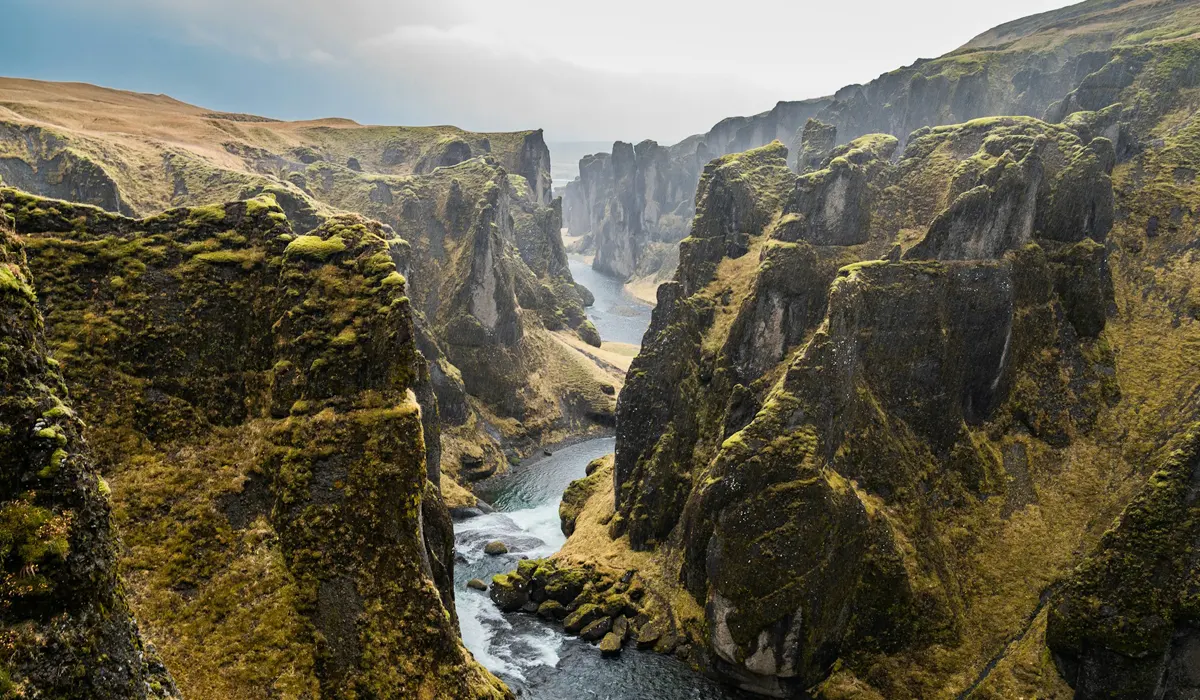
When two continents collide, the drama above ground is obvious: mountains rise, landscapes fold, and rocks crumple into impressive ranges like the Himalayas. But what’s less visible is the fate of the crust that doesn’t stay on top. Much of it is dragged down, sinking deep into Earth’s interior, far beyond where geologists can sample directly.
This sinking crust is denser and heavier than the upper layers, so it’s pulled down by gravity and plate forces. Yet, it doesn’t simply melt away or vanish. Instead, it undergoes a complex journey, influenced by its composition and the intense conditions deep underground. The mystery has been what happens next — how does this crust affect the rocks that form later, sometimes tens of millions of years after the collision?
The Continental Crust Sinking Process: A New Model
Recent work led by Daniel Gómez-Frutos and colleagues offers a clear sequence explaining this process. Their research combined computer simulations with lab experiments that mimic the extreme pressures and temperatures deep inside Earth.
As the continental plates collide, the lower part of the sinking crust, which is denser, continues its descent, pulled by its own weight. Meanwhile, the upper crust, lighter and rich in silica, behaves differently. At around 60 miles deep, this upper crust can detach and begin to rise back toward the surface. This happens only if the upper crust is weak enough to slip free from the denser material below.
This rising of the upper crust is called relamination. It drifts upward and attaches to the underside of the overriding plate, mechanically mixing with the mantle rock just beneath it. This forms a hybrid zone — a blend of crust and mantle minerals — deep underground.
Expert Tip
Relamination explains why rocks with mixed mantle and crust chemistry appear long after mountain-building collisions end.
Lab Experiments Confirm the Chemistry
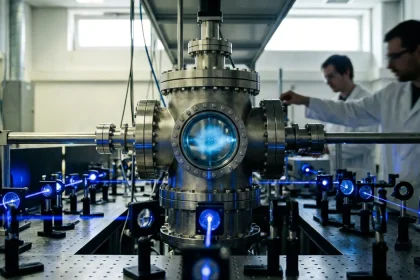
The computer models alone couldn’t explain the chemical signatures found in post-collisional rocks. So, the research team recreated the process in the lab by melting mixtures of peridotite (mantle rock) combined with materials representing the relaminated upper crust.
The resulting melts matched the chemistry seen in real-world mountain belts worldwide. These magmas were rich in magnesium, potassium, and specific trace elements, but low in calcium — the exact fingerprint geologists have observed for decades in rocks formed after continental collisions.
This match between lab results and natural samples provides strong evidence that the sinking and relamination of continental crust produce the unique chemical signatures found in old mountain belts.
Why the Delay in Magma Formation?
One puzzling observation has been the delay between the end of a continental collision and the appearance of post-collisional magmas. This lag can be around 16 million years or more. The new model explains this timing naturally.
The sinking crust must first reach a depth where the upper crust can peel away and begin rising. Then, the hybrid zone forms and gradually warms over millions of years before melting occurs. This warming and melting process accounts for the delay in magma production.
Moreover, the speed at which plates converge affects this timing. Faster collisions speed up the cycle, while slower ones stretch it out. This variation explains why different mountain belts show different time lags in post-collisional magmatism.
Deep-Time Implications: Echoes from the Archean
Perhaps the most remarkable implication of this study is its connection to Earth’s early history. Some of the oldest known rocks, sanukitoids, formed about 3 billion years ago during the Archean Eon, share the same chemical signature as the post-collisional magmas produced today.
Until now, no clear mechanism explained how this chemistry could arise both in modern and ancient contexts. The sinking and relamination model offers a unifying explanation, suggesting that continental subduction and crust-mantle mixing were already active processes in Earth’s early tectonic system.
This means that plate tectonics, including complex interactions like continental subduction, may have been operating much earlier than previously thought, reshaping our understanding of Earth’s geological evolution.
What This Means for Continental Crust and Mountain Belts
Traditionally, continental crust was seen as a one-way system: it forms at the surface and remains there, building up continents over time. This new research challenges that view by showing that crust can cycle downward and then return, altered and mixed with mantle material.
This recycling process produces hybrid rock zones beneath mountain belts and influences the chemical composition of magmas erupted millions of years after collisions. It also means that the crust is more dynamic and interconnected with the mantle than previously appreciated.
For geologists, this insight opens new ways to interpret ancient rocks and the history recorded in continental cores. Rocks like sanukitoids can now be seen as evidence of long-standing tectonic recycling processes, rather than isolated anomalies.
The Continental Crust Sinking Process: A Window into Earth’s Inner Workings
Understanding what happens to continental crust after it sinks beneath mountains offers a rare glimpse into the deep Earth’s mechanisms. This process connects surface geology with deep mantle dynamics, revealing a cycle of sinking, rising, and melting that shapes continents over millions of years.
It also highlights the importance of combining simulations with laboratory experiments to decode Earth’s complex systems. The chemistry locked in rocks is a record of these hidden processes, waiting to be interpreted.
Ultimately, the continental crust sinking process reshapes how we view mountain belts, crustal recycling, and the very evolution of Earth’s tectonic engine. It reminds us that the surface we see is only part of a much deeper story, written in rock and time.