
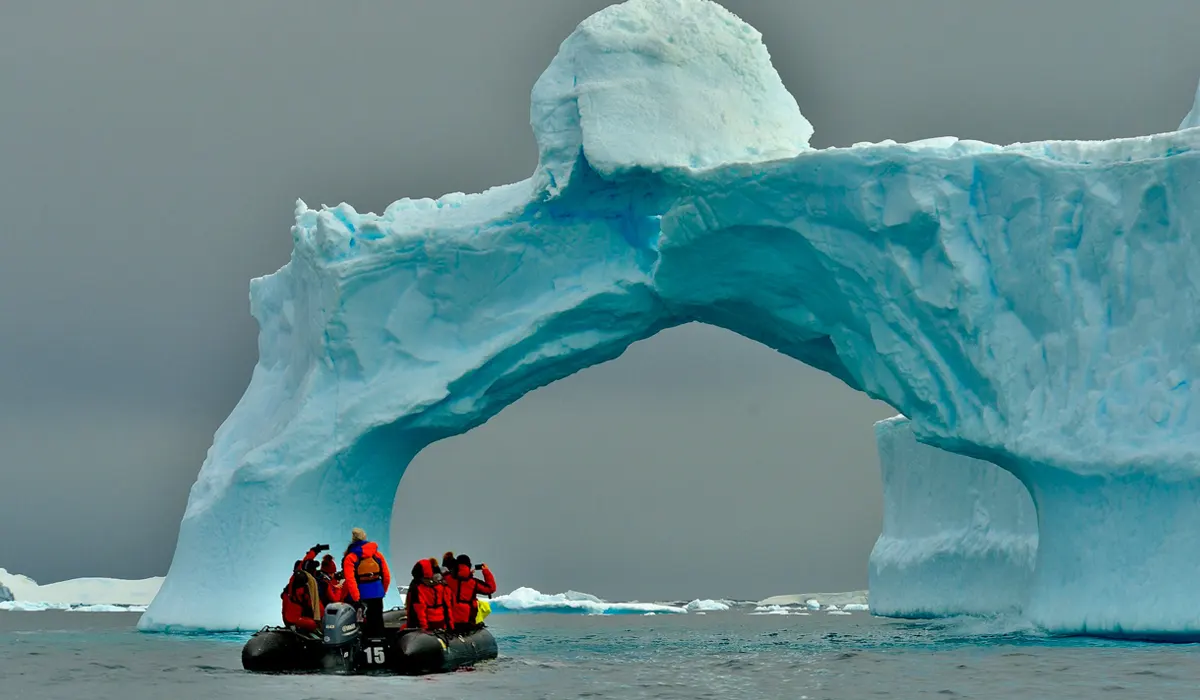
Antarctic sea ice has been behaving unpredictably, with record highs suddenly giving way to unprecedented lows. Imagine a vast, frozen blanket shrinking rapidly, reshaping the Southern Ocean’s delicate balance. What could trigger such a swift and sustained decline after years of expansion? The answer lies beneath the surface—in the mysterious layers of ocean water.
- Understanding the Antarctic Sea-Ice Puzzle
- What Is Winter Water and Why Does It Matter?
- How Winter Water Thinning Preconditioned Sea-Ice Loss
- The Wind-Driven Trigger in 2015
- Changes in Ocean Stratification and Salinity
- Regional Variability and Ocean Dynamics
- Why Models Struggle to Capture These Changes
- The Broader Climate Implications
- The Future of Antarctic Sea Ice
- What This Means for Understanding Antarctic Sea-Ice Decline
- Antarctic Sea Ice Decline: A Complex Dance of Ocean and Wind
For years, scientists puzzled over why Antarctic sea ice, unlike its Arctic counterpart, was growing. Then, around 2015, everything changed abruptly. That shift wasn’t just a random blip; it marked a fundamental transformation in ocean-ice interactions. The key player? A cold, dense water mass called Winter Water, whose thinning set the stage for this dramatic sea-ice retreat.
Understanding the Antarctic Sea-Ice Puzzle
Antarctic sea ice area (SIA) showed a striking increase from 2008 to 2015. Strong winds pushed ice toward the equator, while melt from ice shelves and ocean feedbacks reinforced this growth. But in August 2015, an unexpected event flipped the script: sea ice began a rapid decline, hitting record lows by 2017 and continuing to stay low since then.
This sudden drop defied explanations tied to large-scale climate patterns or existing numerical models. Instead, scientists turned to the ocean’s interior, suspecting that heat stored beneath the surface was leaking upward to melt the ice. However, the exact mechanisms and the role of ocean salinity remained unclear, making this a complex mystery to unravel.
What Is Winter Water and Why Does It Matter?
Winter Water (WW) forms in the cold, deep mixed layer during Antarctic winters. It acts like a cold lid, sitting between the surface ocean and the warmer Circumpolar Deep Water (CDW) below. CDW is salty and warmer, typically around 1–2 °C, and it upwells near the Polar Front.
The WW layer stabilizes the upper ocean by creating a barrier that limits warm CDW from reaching the surface. This stratification is crucial because if warm water from below breaks through, it can melt sea ice from underneath. So, WW’s thickness and stability directly influence how much heat can escape upward, affecting sea ice extent.
How Winter Water Thinning Preconditioned Sea-Ice Loss
Between 2005 and 2015, the WW layer gradually thinned by about 20%, mainly due to the shoaling (rising) of its lower boundary where it meets CDW. This thinning meant the warm CDW moved closer to the surface, increasing the vertical temperature gradient between these layers.
This change wasn’t sudden; it was a slow buildup of heat beneath the surface, setting the stage for a tipping point. The stronger temperature gradient likely enhanced mixing processes that eroded the WW layer from below. Essentially, the ocean was quietly preparing for a major shift in its structure.
The Wind-Driven Trigger in 2015
In winter 2015, stronger-than-average winds swept across the Southern Ocean. These winds increased mechanical mixing in the ocean’s mixed layer, pushing heat and salt upward from the CDW through the now thinner WW barrier into the surface waters.
This mixing raised the temperature of the mixed layer enough to melt sea ice and suppress its formation. The event caused a breakdown in the ocean’s stratification, weakening the WW barrier and allowing more warm water to reach the surface. This triggered the sharp decline in sea ice area observed after 2015.
Expert Tip
The wind-driven heat flux into the mixed layer in August 2015 was more than double the typical wintertime values, enough to melt several centimeters of sea ice.
Changes in Ocean Stratification and Salinity
After 2015, salinity increased in the mixed layer and WW but decreased in the CDW. This shift reduced the density difference between layers, further weakening stratification. The WW barrier’s role diminished, creating greater connectivity between the warm ocean interior and the surface.
This altered structure allowed sustained heat transfer from below, maintaining warmer surface waters and suppressing sea ice growth. The Southern Ocean essentially shifted to a new state where ocean-ice coupling favored sea ice loss rather than growth.
Regional Variability and Ocean Dynamics
The shoaling of the WW–CDW interface was not uniform around Antarctica. For example, the Ross Sea experienced significant shoaling, while the Amundsen and Bellingshausen seas saw deepening. These regional differences influenced local sea ice trends, with areas of shoaling correlating with sea ice expansion before 2015 and with sea ice loss afterward.
This reversal in correlation highlights how the thinning WW layer changed ocean-ice interactions regionally, emphasizing the complexity of Antarctic sea ice dynamics.
Why Models Struggle to Capture These Changes
Many climate models fail to reproduce the timing and magnitude of the Antarctic sea ice changes observed since 2015. One reason is the difficulty in resolving fine-scale processes like WW thinning and wind-driven mixing in the upper ocean.
Models often lack sufficient observational data to accurately represent the evolving stratification and salinity changes that govern heat transfer. This gap underscores the importance of sustained, high-resolution ocean observations to improve predictions of Antarctic sea ice behavior.
The Broader Climate Implications
Antarctic sea ice influences global climate by regulating heat exchange between ocean and atmosphere, affecting albedo (surface reflectivity), ocean circulation, and marine ecosystems. The recent sustained sea ice loss impacts these processes, potentially altering carbon uptake and regional weather patterns.
Understanding the role of WW thinning and wind-driven mixing helps clarify how ocean changes can drive abrupt shifts in sea ice, offering insights crucial for anticipating future climate dynamics in the Southern Ocean.
The Future of Antarctic Sea Ice
The Southern Ocean’s ongoing warming and salinity changes suggest that the current low sea ice state may persist or even intensify. However, it remains uncertain whether this represents a permanent regime shift or a phase within longer-term variability.
Continued observations and research are essential to monitor WW and CDW dynamics, wind patterns, and sea ice responses. This knowledge will be key to predicting how Antarctic sea ice will evolve and how it will influence the Earth’s climate system.
What This Means for Understanding Antarctic Sea-Ice Decline
The thinning of Winter Water was a silent precondition that set the stage for the dramatic Antarctic sea ice decline starting in 2015. Strong winds triggered the upward mixing of warm Circumpolar Deep Water, breaking through this weakened barrier and melting sea ice from below.
This interaction between ocean layers and atmospheric forces explains much of the abrupt sea ice loss observed in recent years. It also highlights the need to consider subsurface ocean processes, not just surface conditions, when studying Antarctic sea ice changes.
Antarctic Sea Ice Decline: A Complex Dance of Ocean and Wind
The story of Antarctic sea ice decline is not one of simple cause and effect. It involves a layered interplay between ocean water masses, atmospheric forces, and ice dynamics. Winter Water thinning quietly altered the ocean’s structure over a decade, bringing warm deep water closer to the surface. Then, in 2015, strong winds stirred this heat upward, melting sea ice and shifting the system into a new state.
This process underscores how subtle changes beneath the surface can have outsized impacts on the climate system. It also warns us that Antarctic sea ice is sensitive to combined ocean-atmosphere changes that are not always obvious from surface observations alone.
Understanding these mechanisms is essential for anyone interested in the future of the Southern Ocean and global climate. The causes of Antarctic sea ice decline are rooted in complex, interconnected processes—especially the role of Winter Water—that require continued study and attention.
What is Winter Water and why is it important for Antarctic sea ice?
Winter Water is a cold, dense ocean layer formed in Antarctic winters. It acts as a barrier that prevents warmer deep water from reaching the surface, thus protecting sea ice from melting.
How did Winter Water thinning contribute to sea ice decline?
Between 2005 and 2015, Winter Water thinned, allowing warmer Circumpolar Deep Water to rise closer to the surface. This preconditioned the ocean for stronger mixing that melted sea ice after 2015.
What triggered the rapid Antarctic sea ice decline after 2015?
Stronger-than-average winds in 2015 increased mechanical mixing, pushing heat from deep waters into the surface ocean. This broke down stratification and caused rapid sea ice melt.
Why do climate models struggle to predict Antarctic sea ice changes?
Many models cannot accurately simulate fine-scale ocean processes like Winter Water thinning and wind-driven mixing, leading to poor representation of the timing and extent of sea ice changes.
What are the broader impacts of Antarctic sea ice loss?
Sea ice loss affects global climate by altering heat exchange, ocean circulation, carbon uptake, and marine ecosystems, with potential consequences for weather patterns and climate feedbacks.