
What if the very waves we use to see inside the body could also wipe out viruses like COVID-19 and the flu? It sounds like science fiction, but recent research shows sound waves at certain frequencies can physically break down viruses. This discovery could change how we approach viral infections.
- How Sound Waves Interact with Viruses
- The Science Behind Ultrasound-Induced Viral Breakdown
- Why This Matters: Ultrasound vs. Traditional Virus Treatments
- Frequency and Virus Variants: What Changes?
- How Ultrasound Resonance Differs from Cavitation
- Potential Clinical Applications and Challenges
- The Path Forward for Sound Wave Antiviral Therapy
- A New Frontier in Fighting Viral Threats
- Sound Waves as a Safe, Effective Antiviral Tool
Imagine a treatment that doesn’t rely on drugs or chemicals but uses harmless sound waves to disable viruses. It’s not magic — it’s physics working at the tiniest scales, targeting virus structures without harming human cells. Let’s explore how this works and why it matters.
How Sound Waves Interact with Viruses
Viruses are incredibly small, often just 100 nanometers wide, yet they have complex structures. Many respiratory viruses like SARS-CoV-2 (the virus behind COVID-19) and Influenza A (H1N1) have a lipid envelope and protein spikes that allow them to infect cells. These physical features make them susceptible to mechanical forces.
Ultrasound waves — sound waves at frequencies higher than humans can hear — can interact with these viral particles. In typical medical imaging, ultrasound frequencies range from 3 to 20 megahertz (MHz). When viruses are exposed to ultrasound in this range, the waves can cause the virus particles to vibrate at their natural frequencies, a phenomenon called acoustic resonance.
This resonance isn’t about heating or chemical reactions. Instead, it mechanically stresses the virus, causing the envelope and surface proteins to break apart. The virus essentially falls apart, losing its ability to infect.
The Science Behind Ultrasound-Induced Viral Breakdown
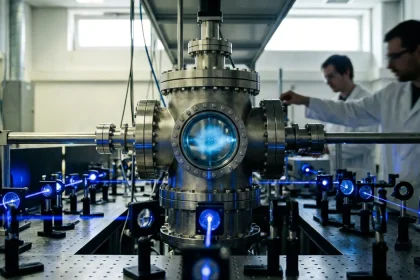
Researchers exposed SARS-CoV-2 and Influenza A viruses to ultrasound frequencies around 7.5 MHz using clinical diagnostic devices. They observed a reduction in virus particle size and an increase in structural irregularities. Tools like dynamic light scattering (DLS) showed fragmented viral particles after treatment, indicating the virus was physically breaking down.
Microscopy techniques, including scanning electron microscopy (SEM) and atomic force microscopy (AFM), revealed damaged viral envelopes and disrupted surface structures. The viruses appeared collapsed and fragmented, not just altered chemically but mechanically destroyed.
Importantly, the ultrasound treatment did not raise the temperature or change the chemical environment, ruling out heat or pH changes as causes. The mechanical stress from resonance was the key factor.
Expert Tip
Viral particles have specific resonance frequencies based on their size and structure, making targeted ultrasound frequencies effective for destabilization.
Why This Matters: Ultrasound vs. Traditional Virus Treatments
Traditional antiviral methods focus on drugs or vaccines, which target viral proteins or genetic material chemically or biologically. These approaches face challenges like rapid virus mutation and resistance. Physical methods like ultraviolet light or ionizing radiation can inactivate viruses but damage surrounding tissues, limiting clinical use.
Ultrasound offers a non-invasive, tissue-safe alternative. Unlike low-frequency ultrasound that causes cavitation (bubble collapse and unpredictable tissue damage), high-frequency ultrasound induces resonance without harmful side effects. This means it can selectively target viruses while leaving human cells intact.
The mechanical index (a measure related to ultrasound pressure and frequency) used in these experiments stayed below thresholds that would cause cavitation, ensuring safety.
Frequency and Virus Variants: What Changes?
The effectiveness of ultrasound depends on matching the frequency to the virus’s resonance. In experiments, the original SARS-CoV-2 strain was more susceptible to ultrasound than variants like Gamma and Delta. These differences likely arise from subtle changes in viral structure affecting mechanical properties.
This suggests that ultrasound therapy could be fine-tuned for different virus strains by adjusting frequencies. Such precision would be a significant advantage over broad-spectrum drugs that can lose efficacy as viruses evolve.
How Ultrasound Resonance Differs from Cavitation
Cavitation occurs when low-frequency ultrasound causes bubbles in liquids to rapidly expand and collapse, generating intense heat and free radicals. This process can destroy viruses but also damages surrounding tissue, making it unsuitable for therapeutic use.
In contrast, resonance at higher frequencies gently vibrates the virus itself without creating bubbles or heat. The virus absorbs the acoustic energy, causing its envelope and proteins to oscillate until structural failure occurs. This mechanical disruption is selective and controlled.
The difference is crucial: resonance-based ultrasound can be applied safely to living tissues, opening the door to therapeutic uses.
Potential Clinical Applications and Challenges
Ultrasound devices are already widespread in medical settings, used safely for imaging. Repurposing them for antiviral treatment could be faster and more cost-effective than developing new drugs. The ability of ultrasound to penetrate tissues non-invasively means it could target viruses in the lungs or other organs.
Additionally, ultrasound might work alongside existing antivirals or immune therapies, weakening viruses mechanically to improve drug effectiveness or immune clearance.
However, challenges remain. In vivo studies are needed to confirm safety and efficacy within complex biological systems. Devices may require optimization to deliver precise frequencies and intensities for different viruses. Understanding how ultrasound affects virus-infected cells and tissues is also critical.
The Path Forward for Sound Wave Antiviral Therapy
The discovery that sound waves can kill viruses by breaking their structure opens a new antiviral strategy. It moves beyond chemical and biological methods, tapping into physical forces at the nanoscale. This approach could provide a broad-spectrum tool against respiratory viruses, adaptable to future outbreaks.
As research progresses, ultrasound could become part of a multi-pronged defense against viral diseases. Its safety profile and existing clinical infrastructure make it a realistic candidate for rapid testing and deployment.
This work also encourages exploring other physical methods that interact with pathogens without harming patients, expanding our antiviral toolkit.
A New Frontier in Fighting Viral Threats
The idea that sound waves can disable viruses like COVID-19 and the flu is more than an intriguing concept; it’s a scientifically supported mechanism with real potential. Ultrasound-induced resonance targets the virus’s physical structure, causing breakdown without collateral damage.
This discovery reminds us that sometimes, the answers to complex biological problems lie in the physics of how things move and vibrate. It challenges us to think beyond traditional approaches and consider how mechanical forces can be harnessed in medicine.
Sound waves killing viruses is no longer just a theory — it’s a promising avenue for future antiviral therapies that could complement vaccines and drugs, helping us stay ahead in the ongoing battle against viral diseases.
Sound Waves as a Safe, Effective Antiviral Tool
The ability of ultrasound to selectively destabilize enveloped viruses like SARS-CoV-2 and Influenza A offers a promising physical method for antiviral therapy. Unlike chemical treatments, ultrasound works by mechanical resonance, causing direct structural damage to the virus without harming host tissues.
This method’s safety stems from operating within diagnostic ultrasound frequencies that avoid cavitation-related tissue damage. The resonance-driven mechanism depends on virus size and elasticity, making it adaptable to different viral strains by tuning frequency.
Such a strategy could transform how we approach viral infections, providing a non-invasive, drug-free option that complements existing treatments. As research advances, ultrasound-based antivirals might become a valuable addition to public health responses, especially when rapid viral evolution challenges current therapies.
The concept that sound waves can kill COVID and flu viruses through targeted resonance expands our understanding of virus control and introduces a novel, physics-based tool with real clinical potential.
How do sound waves kill viruses like COVID-19?
Sound waves at specific high frequencies cause viruses to vibrate at their natural resonance. This mechanical stress breaks the viral envelope and proteins, disabling the virus without heating or chemical damage.
Is ultrasound treatment safe for human tissues?
Yes. The frequencies used avoid cavitation, which can damage tissues. Diagnostic ultrasound devices operate within safe mechanical and thermal limits, making ultrasound a non-invasive and safe option.
Can ultrasound work on different virus variants?
Effectiveness varies by viral structure. Different strains may require tuning of ultrasound frequency to match their resonance, but the method shows promise across multiple variants.
How does ultrasound compare to other physical virus inactivation methods?
Unlike ultraviolet or ionizing radiation, ultrasound resonance does not damage surrounding tissues. It offers a controlled, mechanical way to disrupt viruses safely inside the body.
What are the next steps for ultrasound antiviral therapy?
Further in vivo studies are needed to confirm safety and efficacy in living organisms. Development of specialized ultrasound devices optimized for antiviral use will support clinical translation.
Source: Veras, F.P., Nakamura, G., Pereira-da-Silva, M.A. et al. Ultrasound effectively destabilizes and disrupts the structural integrity of enveloped respiratory viruses. Scientific Reports 16, 8612 (2026).