

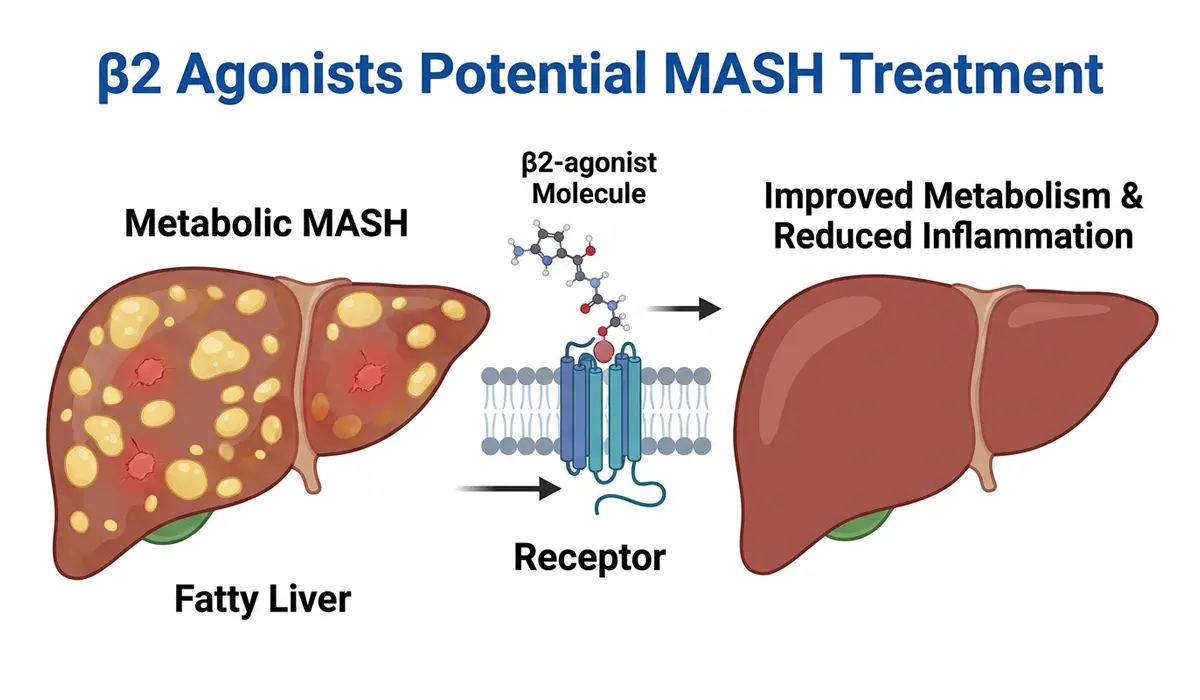
Imagine being told that a common class of drugs, originally designed to help with lung conditions, might also hold the key to treating a serious liver disease linked to diabetes. What if that same drug could reverse liver fat buildup and reduce inflammation, offering new hope to millions who currently face limited options? This is no distant dream—it’s what recent research is uncovering about beta 2 adrenergic receptor agonists and their potential to treat metabolic dysfunction-associated steatohepatitis (MASH).
- How Beta 2 Adrenergic Receptor Agonists Impact Liver Health
- Cellular Insights: How Formoterol Modulates Liver Cell Metabolism
- Real-World Evidence: Beta 2 Agonists and Improved Outcomes in MASH Patients
- The Mechanistic Link Between β2-AR Activation and Metabolic Improvement
- Challenges and Considerations for Clinical Use
- Potential Impact on Treatment Landscape
- Why Beta 2 Adrenergic Receptor Agonists Deserve Closer Attention
- Future Directions and Research Needs
- Beta 2 Adrenergic Receptor Agonists: A New Frontier in MASH Treatment
MASH, a severe form of fatty liver disease closely tied to type 2 diabetes, affects a staggering number of people worldwide. Despite its prevalence, treatment options remain sparse, with only a couple of approved drugs showing limited success. The discovery that beta 2 adrenergic receptor (β2-AR) agonists like formoterol can improve liver health by enhancing mitochondrial function and reducing fat accumulation is a significant step forward. But how exactly do these drugs work, and what does this mean for patients?
Let’s unpack the science behind this promising approach, examining the evidence from animal models, cell cultures, and real-world patient data that together paint a compelling picture of β2-AR agonists as a potential therapy for MASH.
How Beta 2 Adrenergic Receptor Agonists Impact Liver Health
The connection between type 2 diabetes and liver disease is well established. Insulin resistance, a hallmark of diabetes, leads to fat buildup in the liver, setting the stage for metabolic dysfunction-associated steatotic liver disease (MASLD) and its more severe form, MASH. Over time, MASH can cause liver fibrosis and serious complications like cirrhosis or liver cancer.
Beta 2 adrenergic receptor agonists are drugs that activate β2-ARs, which are found in various tissues including the liver. Traditionally used to relax airway muscles in asthma and COPD, these agonists have now been shown to influence metabolism at the cellular level. Formoterol, a long-acting β2-AR agonist, can stimulate mitochondrial biogenesis—the process by which cells increase the number and function of mitochondria, the energy powerhouses. This boost in mitochondrial function helps cells burn fat more efficiently, reducing the accumulation of harmful lipids.
In mouse models fed a high-fat diet mimicking type 2 diabetes, formoterol treatment for four weeks significantly reduced liver steatosis. Histological analysis showed fewer fat droplets and lower NAFLD activity scores compared to untreated mice. This reduction was accompanied by increased levels of PGC-1α, a master regulator of mitochondrial biogenesis, and higher amounts of electron transport chain proteins, indicating enhanced mitochondrial capacity.
Transmission electron microscopy confirmed an increase in mitochondrial number per liver cell area after formoterol treatment. Lipid profiling revealed decreases in triacylglycerides and monoglycerides, key components of liver fat. Together, these findings suggest that β2-AR activation improves liver metabolism by promoting fat breakdown and energy production.
Cellular Insights: How Formoterol Modulates Liver Cell Metabolism
To understand the cellular mechanisms, researchers used HepaRG cells, a human liver cell line that mimics hepatocyte function. When exposed to free fatty acids, these cells accumulated lipid droplets, mimicking fatty liver conditions. However, cells treated with formoterol alongside fatty acids showed significantly less lipid accumulation.
Measuring oxygen consumption rates revealed that formoterol increased both basal and ATP-linked respiration in these cells, especially when combined with fatty acids. This indicates that the drug enhances mitochondrial energy production, helping cells process excess fat more effectively.
RNA sequencing of treated cells showed that formoterol upregulated genes involved in oxidative phosphorylation and amino acid metabolism while downregulating inflammatory and lipid synthesis pathways. Notably, formoterol increased expression of CPS1, a mitochondrial enzyme critical for the urea cycle and ammonia detoxification, suggesting improved metabolic function.
These cellular changes support the idea that β2-AR agonists shift liver metabolism away from harmful lipid accumulation toward more efficient energy use and reduced inflammation.
Expert Tip
Formoterol’s effect on mitochondrial biogenesis may help restore liver cell energy balance disrupted in MASH.
Real-World Evidence: Beta 2 Agonists and Improved Outcomes in MASH Patients
Translating findings from the lab to patients is crucial. Researchers analyzed health records from over 59,000 patients diagnosed with MASH, comparing those who used long-acting β2-AR agonists (LABAs) like formoterol with those who did not.
After adjusting for factors like age, sex, comorbidities, and liver disease severity, patients on LABAs showed significantly lower rates of cirrhosis, ascites, variceal bleeding, spontaneous bacterial peritonitis, hepatorenal syndrome, and all-cause mortality over two years. This suggests that β2-AR agonists may protect against liver disease progression and its complications in humans.
While these data are observational and cannot establish causality, they align well with the mechanistic evidence from animal and cell studies. The safety profile and widespread clinical use of β2-AR agonists make them attractive candidates for repurposing in liver disease.
The Mechanistic Link Between β2-AR Activation and Metabolic Improvement
Activation of β2-AR stimulates adenylyl cyclase, increasing cyclic AMP (cAMP) levels and activating protein kinase A (PKA). This signaling cascade promotes lipolysis by phosphorylating enzymes like ATGL and HSL, which break down stored fats.
In addition to direct metabolic effects, β2-AR activation has anti-inflammatory properties, reducing macrophage infiltration and pro-inflammatory gene expression in the liver. This dual action addresses both the fat accumulation and inflammation that drive MASH progression.
Interestingly, while formoterol enhances mitochondrial and oxidative phosphorylation pathways, it does not simply increase canonical lipid metabolism genes. Instead, it appears to promote a metabolic shift favoring amino acid utilization and improved mitochondrial function, which may be more effective in restoring liver health.
Challenges and Considerations for Clinical Use
Despite promising findings, there are challenges to consider. The doses of formoterol used in mouse studies are higher than typical human doses for lung conditions, raising concerns about potential cardiovascular side effects like increased heart rate or blood pressure changes.
Targeted delivery systems, such as liver-specific nanoparticles, could minimize systemic exposure and reduce side effects. Such approaches have been explored in kidney disease models with formoterol-containing nanoparticles, suggesting feasibility.
Another limitation is that the mouse model used did not show significant fibrosis, a key feature of advanced MASH. Future studies should use fibrosis-prone models to assess whether β2-AR agonists can also reverse or prevent liver scarring.
Finally, long-term safety and efficacy in humans with MASH require rigorous testing through randomized controlled trials. Encouragingly, a clinical trial is underway investigating formoterol in patients with type 2 diabetes and chronic kidney disease, which may provide insights relevant to liver disease.
Potential Impact on Treatment Landscape
Currently, only two drugs, resmetirom and semaglutide, are approved for MASH treatment, and both have limitations in efficacy and side effects. The possibility that β2-AR agonists, already well-characterized and widely used for other indications, could offer a new therapeutic avenue is significant.
By improving mitochondrial function, reducing fat accumulation, and dampening inflammation, β2-AR agonists address core pathological features of MASH. This integrated mechanism may translate into better clinical outcomes and fewer complications.
Given the global burden of type 2 diabetes and associated liver disease, expanding treatment options with repurposed drugs like formoterol could have a meaningful public health impact.
Why Beta 2 Adrenergic Receptor Agonists Deserve Closer Attention
The evidence suggests that β2-AR agonists like formoterol do more than relax airways—they modulate liver metabolism in ways that could halt or reverse MASH progression. This challenges the traditional view of these drugs and opens new research paths.
Understanding the precise molecular mechanisms, optimal dosing, and patient selection will be key to translating these findings into practice. Meanwhile, clinicians should remain aware of these developments as potential adjunct therapies emerge.
The intersection of metabolic, inflammatory, and mitochondrial pathways makes β2-AR agonists a unique tool in tackling a complex disease like MASH.
Future Directions and Research Needs
Further research should focus on:
- Testing β2-AR agonists in liver fibrosis models to assess anti-fibrotic potential.
- Exploring targeted drug delivery to minimize systemic side effects.
- Conducting randomized clinical trials to establish safety and efficacy in MASH patients.
- Investigating combination therapies with existing treatments for synergistic effects.
- Understanding long-term metabolic and cardiovascular impacts in diverse patient populations.
These steps will clarify the role of β2-AR agonists and guide their integration into clinical care.
Beta 2 Adrenergic Receptor Agonists: A New Frontier in MASH Treatment
The potential of beta 2 adrenergic receptor agonists to improve liver health in metabolic dysfunction-associated steatohepatitis represents a promising development. By enhancing mitochondrial function, reducing fat accumulation, and suppressing inflammation, these drugs target fundamental disease mechanisms.
While challenges remain, the convergence of animal studies, cell experiments, and clinical data supports further exploration of β2-AR agonists as a treatment strategy. For patients with MASH, especially those with type 2 diabetes, this could mean access to an effective and well-tolerated therapy in the near future.
The long-tail keyword beta 2 adrenergic receptor agonists for MASH treatment fits naturally into this emerging narrative, highlighting a new direction in managing a complex and widespread liver condition.




, offering new therapeutic possibilities.)